
AgriTech, Entrepreneurship and the Future of India: An MBA Perspective
Introduction
India is entering a transformational era where technology, entrepreneurship and sustainable development are becoming the key drivers of economic growth. The vision of Viksit Bharat 2047 aims to create a developed, innovative and globally competitive nation. For MBA students and future business leaders, this transformation presents both opportunities and responsibilities. Success in the coming decades will depend on how effectively businesses combine technology, management and social impact.
One of the most promising sectors contributing to India's future growth is Agritech. Agriculture continues to support millions of livelihoods and remains a significant pillar of the Indian economy. However, traditional agricultural practices are gradually being enhanced through digital technologies, artificial intelligence, precision farming, data analytics and smart supply-chain systems. These innovations are helping improve productivity, reduce wastage and create better market access for farmers.
From an MBA perspective, Agritech is not merely an agricultural transformation; it is a business opportunity. Future managers can play an important role in developing efficient value chains, creating farmer-centric business models, managing agricultural exports and building sustainable enterprises. As India moves toward food security and agricultural modernization, professional management skills will become increasingly valuable in the agribusiness ecosystem.
" The future of India will not be shaped by technology alone. It will be shaped by leaders who can combine innovation, business excellence and social responsibility to create lasting impact for the nation. "
Artificial Intelligence is another force reshaping industries across the country. Businesses today use AI for demand forecasting, customer relationship management, financial analysis, risk assessment and operational efficiency. Managers who understand both technology and business strategy can help organizations make faster and more informed decisions. However, technological growth must be accompanied by ethical considerations, responsible data management and a commitment to transparency.
Entrepreneurship will also play a defining role in India's growth story. New ventures create employment, encourage innovation and solve local challenges through scalable solutions. The startup ecosystem has demonstrated that innovative ideas, when supported by technology and effective management, can create significant economic and social impact. Future MBA graduates must develop entrepreneurial thinking, problem-solving abilities and a willingness to embrace calculated risks.
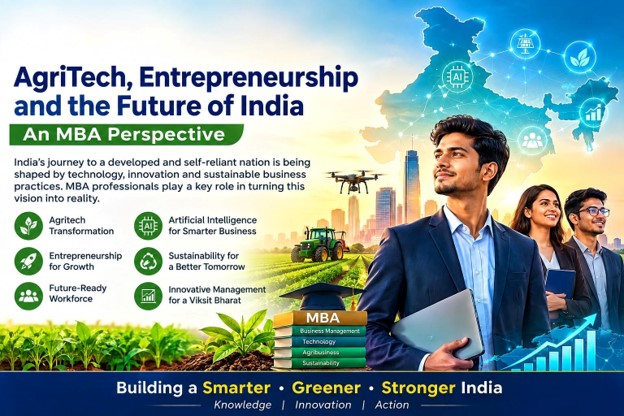
Sustainability has emerged as another critical business priority. Organizations are increasingly focusing on environmental responsibility, renewable energy, waste reduction and sustainable supply chains. Future business leaders will be expected to balance profitability with long-term environmental and social objectives. Businesses that integrate sustainability into their strategies are likely to gain competitive advantages while contributing positively to society.
The workforce of tomorrow is also evolving rapidly. Young professionals seek meaningful careers, digital workplaces, flexibility and continuous learning opportunities. Managers who understand changing employee expectations can build innovative and high-performing organizations. Leadership in the future will require emotional intelligence, adaptability and the ability to manage diverse teams in a technology-driven environment.
For MBA students, academic knowledge alone is no longer sufficient. The future demands a combination of business acumen, technological understanding, entrepreneurial mindset and social responsibility. Subjects such as finance, marketing, operations, business analytics and strategic management must be connected with real-world challenges and opportunities. Practical learning, industry exposure and continuous skill development will become essential for career success.
India's journey towards becoming a developed nation by 2047 will require visionary entrepreneurs, responsible managers and innovative organizations. By embracing technology, promoting sustainable development and fostering entrepreneurship, the next generation of MBA graduates can contribute significantly to building a stronger, smarter and more prosperous India.
Conclusion
Smart investing is not about being the richest person in the room; it is about becoming financially independent and making better decisions with money. For Gen-Z, the right combination of financial knowledge, technology, diversification, discipline, and patience can create a strong foundation for the future.